
By Alex Moore
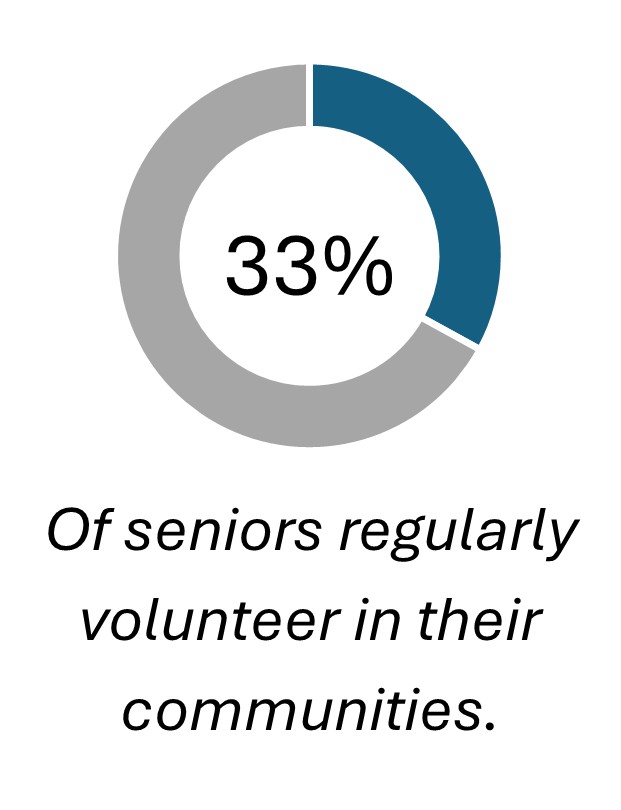
It’s the holiday season, which for many seniors, means it’s time to give back to their communities. According to the 2025 Lifestyle Survey, a free TSCL study of more than 1,200 retirees, about 33 percent of older Americans say they regularly volunteer in their communities. With just 28 percent of Americans overall serving as formal volunteers, according to the U.S. Census Bureau’s latest data, seniors are substantially more likely than their neighbors to get out and help others.
Volunteering Benefits Seniors as Much as Their Communities
The 2025 Lifestyle Survey uncovered an interesting connection between participating as volunteers and seniors’ overall quality of life. Using statistical testing, the survey determined that seniors who regularly volunteer—no matter how often—are significantly more likely to say they’re very satisfied with their lives. They’re also much more likely to say they’ve recently felt positive emotions, like enjoyment and social connection, and less likely to say they’ve recently felt negative emotions, like anger, loneliness, and sadness.
That only reinforces a mountain of existing evidence supporting the benefits of volunteering. According to the Mayo Clinic, volunteering is associated with better physical and mental health, lower rates of depression and anxiety, and reduced stress.
How Often Do Seniors Tend to Volunteer?
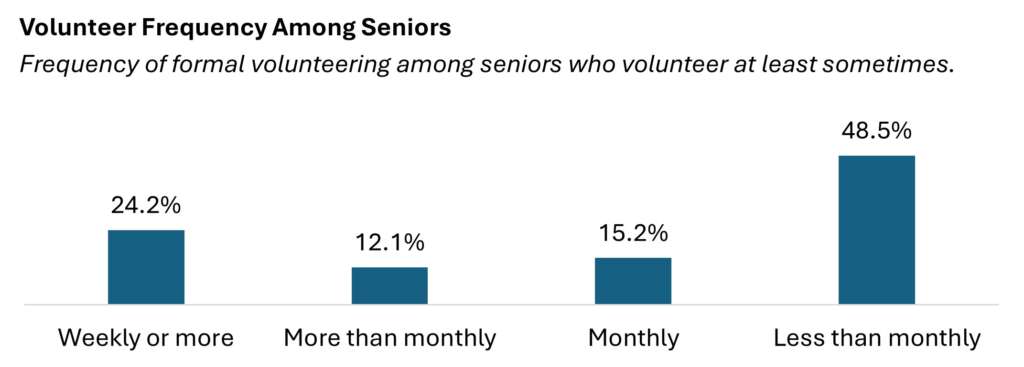
Among seniors who say they volunteer regularly, mileage varies. About one in four are “super volunteers,” participating in a community organization at least once a week. As shown in the figure below, about 12 percent serve as volunteers less than weekly but more than monthly, while another 15 percent get involved about once a month. The remaining half of seniors who regularly volunteer do so less than monthly.
Interestingly, TSCL’s study suggests that seniors may benefit from volunteering even in small doses. No matter how often they did it, participants in the 2025 Lifestyle Survey who
get out and volunteer are still more likely to report high satisfaction with their lives than their peers who never volunteer.
Do You Want to Get Started?
If you want to get out and volunteer, and realize the health benefits that go with it, the best place to start is finding an organization that represents values you want to advance in the world. TSCL’s research shows that the top kind of volunteer organizations for seniors tend to be charities and nonprofits (56 percent), followed by religious organizations (34 percent) and political and activist organizations (14 percent).
Most community organizations that accept volunteers will have postings on their websites, although others may require finding opportunities the traditional way through word of mouth. Some will offer continuous opportunities that require a bit more commitment, such as managing the supplies of a food pantry at a church, while others will offer more one-off opportunities, such as welcoming guests at community events.
If you want to volunteer, what’s most important is to find the volunteer role that best fits your life priorities, goals, and skills! It’s the best way to make not just a positive impact on your community, but yourself.