
By Alex Moore
We hear a lot of stories about American seniors in difficult financial situations, with many struggling to afford essentials such as groceries, rent, and basic healthcare services like a dentist or optometrist appointment. However, a new TSCL study of 1,359 seniors shows just how dire the situation is.
As shown in the figure below, only one in five older Americans (19.4 percent) describe themselves as financially healthy in retirement, defined as having adequate income that will last through retirement, as long as they live. Meanwhile, 52.4 percent describe themselves as financially vulnerable, with enough income to get by for now, but doubts about the future. Most concerning of all, the remaining 28.2 percent categorized themselves as financially at risk, with too little income to cover even essentials.
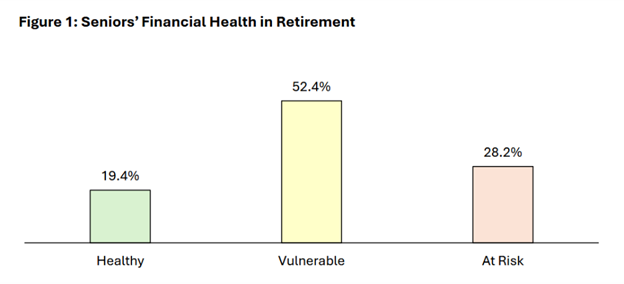
The seniors who describe themselves as financially vulnerable and at risk aren’t just making a mountain out of a molehill, either. They’re more likely to worry about inflation drying up their savings, more apt to depend on public assistance programs like food stamps and Medicaid, and more prone to forgoing medical services due to cost. For example, financially at-risk seniors are about four times more likely to have forgone a doctor’s visit of some kind in the last year because they couldn’t afford it, compared to their financially healthy peers.
Here’s the upshot: Most American seniors are living from benefits check to benefits check, a version of living paycheck to paycheck that’s a lot harder to solve because even for those who wanted to return to the workforce, age-related discrimination is a real thing. The only real solution is to augment Social Security and Medicare, unless we’re comfortable leaving the seniors who built our economy out to dry—an option none of us would prefer.
The worst part is that solutions are already on the table. Congress has proposed several bills that would change the tax code to pay for more benefits today while making Social Security’s finances more sustainable for another generation, but bipartisan gridlock keeps getting in the way. If you’re interested in learning more, we highly encourage you to download TSCL’s 2025 Retirement Survey Report, available for free here, to see which long-term solutions seniors like you support and oppose.